One of the most important steps in packaging is to measure accurate box dimensions. These measurements avoid unnecessary problems whether you want to ship products or store items. A box that is too large increases shipping costs. Sometimes it also damages the product during transportation. While a box that is small will crush the product or make it difficult to pack products in them.
Correct packaging dimensions improve product presentation, customer satisfaction, and the overall unboxing experience. Businesses in ecommerce or retail packaging, cosmetics packaging and shipping industries all rely on accurate measurements. This is necessary to protect their products and reduce waste.
Lets explore how to measure box dimensions, the difference between internal and external dimensions and the best practices to select the perfect packaging size.
The dimensions of box are referred to the three main measurements of a packaging box:
These measurements describe the size and shape of the box. Understanding of these dimensions is important for product protection, warehouse storage and packaging design of shipping boxes.
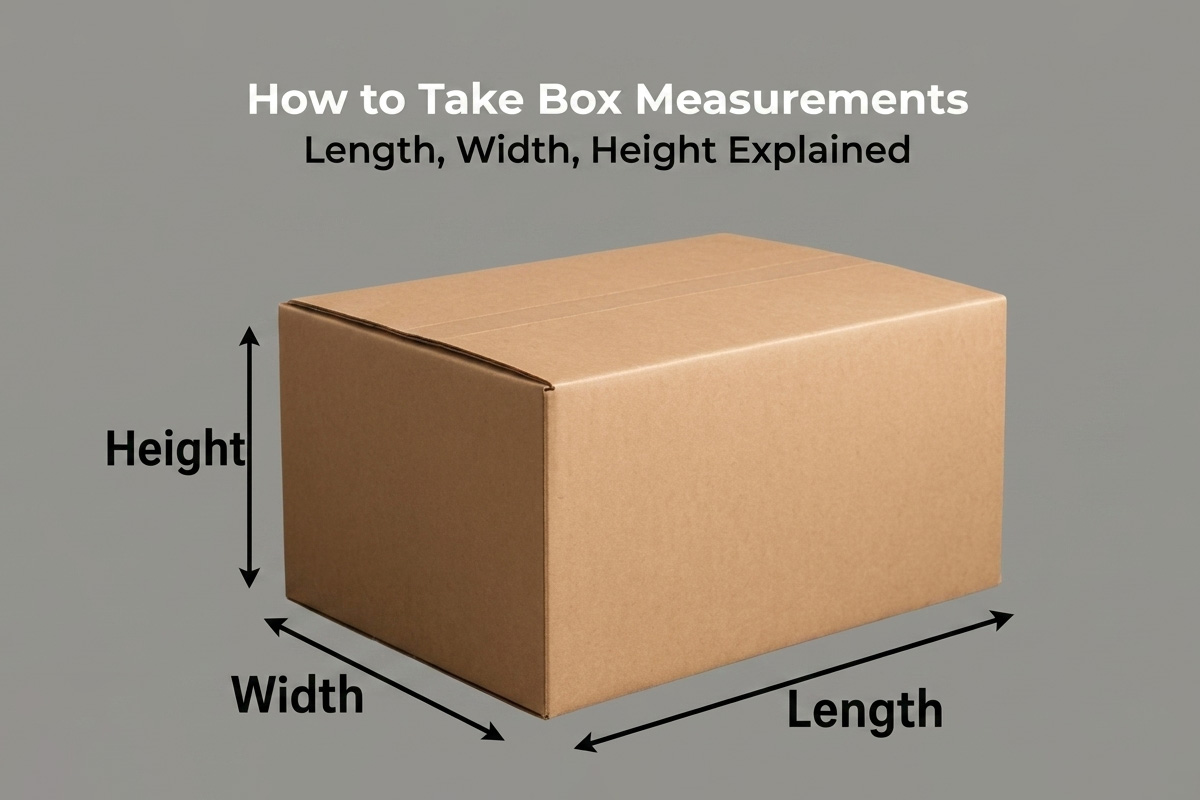
Box dimensions are written in the standard format of Length × Width × Height (L × W × H) in the packaging industry. These three measurements determine the internal space of the box. These also help packaging manufacturers create the right fit for your products. This order is important because changing the sequence changes the actual box shape.
For example
These two boxes are completely different in orientation and product fit. These dimensions are used in almost every packaging industry including custom boxes, corrugated packaging and shipping cartons.
It is important to understand the meaning of each dimension before you measure a box.
Length is the longest side of the box opening. It is measured from left to right across the front opening.
Width is the shorter horizontal side next to the length. It is measured from front to back.
Height is the vertical measurement from the bottom to the top of the box. It is also called depth in the packaging industry. It determines how tall the package stands when upright.
Many businesses overlook the need for accurate packaging measurements. Even a small mistake creates major problems during shipping and storage.
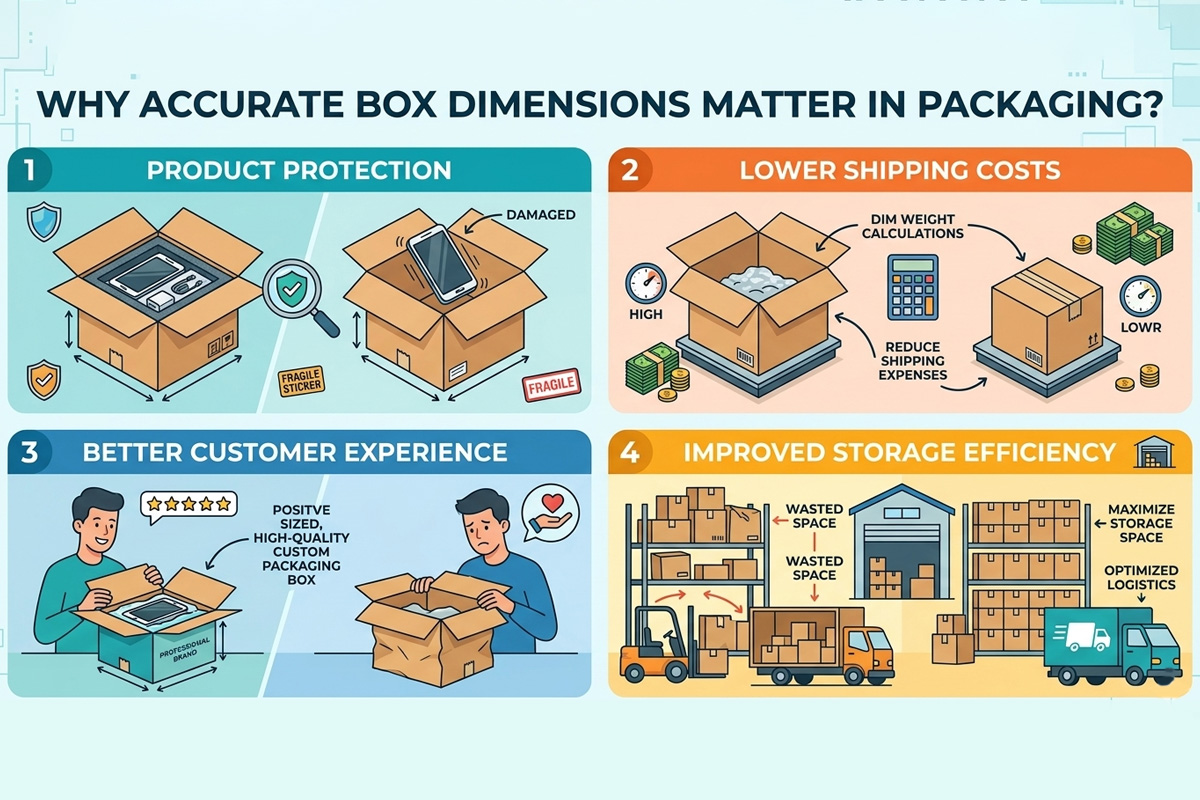
A proper measured box keeps products secure during transportation. If there is empty space inside the package the product moves around and becomes damaged. Fragile products need snug fitting packaging. They also require proper cushioning material including bubble wrap, air cushions or foam inserts.
Shipping companies use dimensional weight (DIM weight) to calculate shipping costs. Large boxes cost high if the product inside is lightweight. Correct box dimensions reduce shipping expenses by using the right sized packaging.
Customers notice packaging quality on the spot. A proper sized custom packaging box creates a professional appearance. It also improves the unboxing experience. Oversized or damaged packaging has a negative effect on brand reputation and customer loyalty.
Accurate box dimensions allow businesses to stack products with efficiency in warehouses or inside delivery vehicles. This maximizes storage space and improves logistics management.
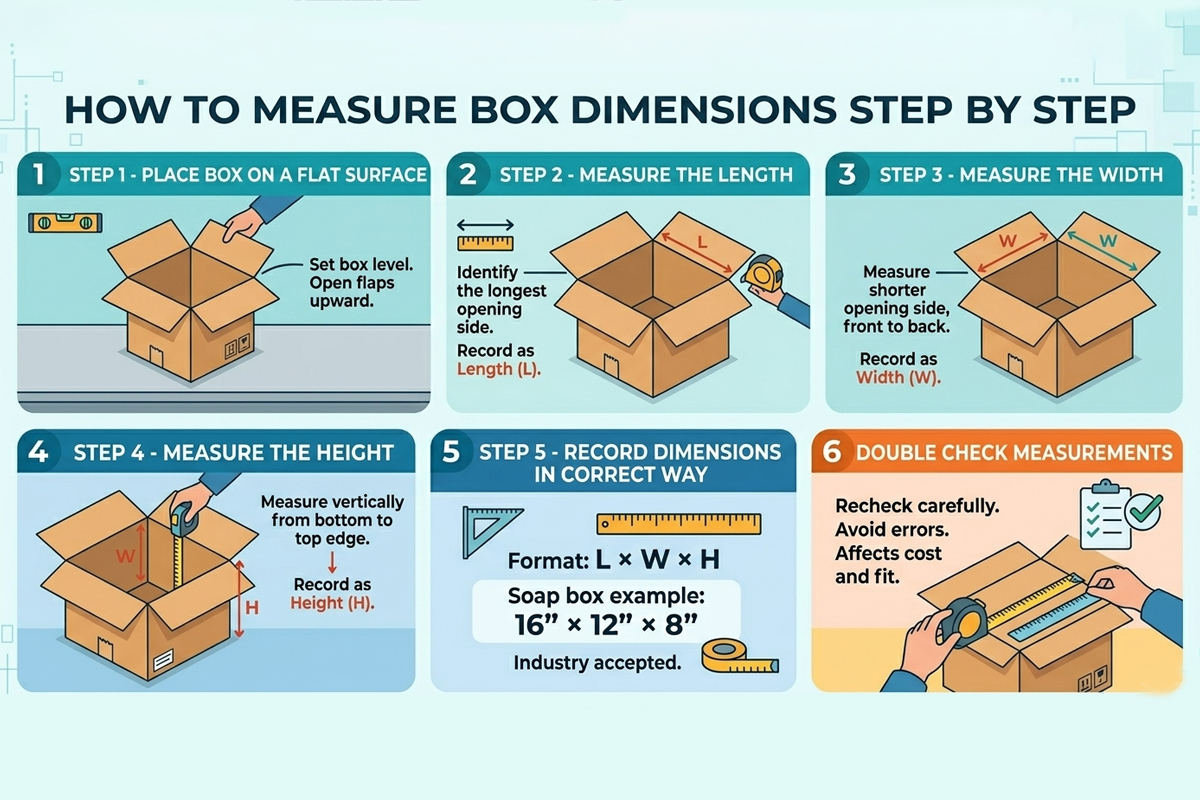
The tool that you need for measurement is tape for large cartons, a ruler for small boxes or a caliper to measure the thickness of the material. Simple steps are given below to measure a box.
First set the box on a clean and level surface. Keep the box upright with the face open upward. Open all flaps to avoid measurement errors.
After keeping the box on a flat surface, identify the longest side of the box opening. Record this measurement as the length.
After getting the length, measure the shorter side next to the length. This measurement runs from front to back across the box opening. Record this value as the width.
At last measure from the bottom of the box to the top edge. This vertical dimension is the height.
You should always write measurements in this format:
L×W×H
For example, Soap box dimensions have length of 16 inches, width of 12 inches and height of 8 inches. We will write it as: 16″ × 12″ × 8″. This format is accepted across the packaging and shipping industries all over the world.
Recheck all measurements with full care before ordering packaging boxes. Even small errors affect product fitting, storage and shipping costs.
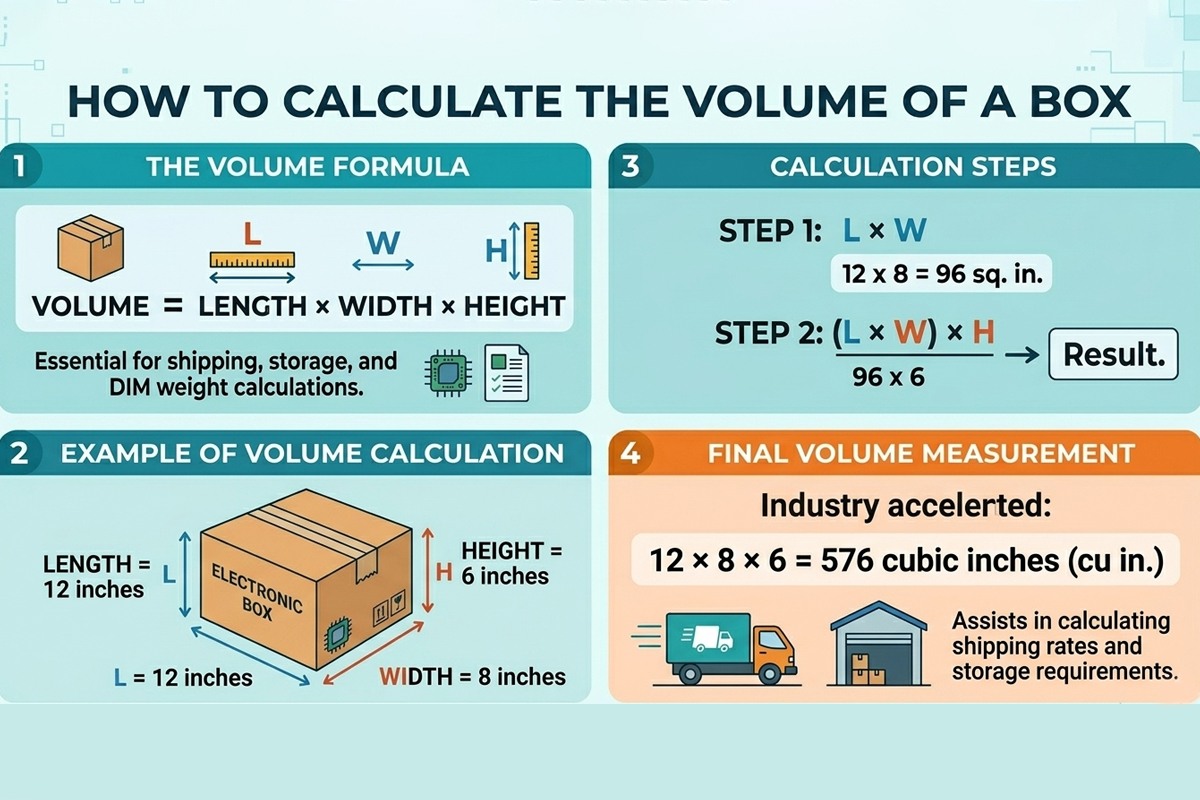
Volume calculation is essential for shipping, storage and dimensional weight calculations. The formula is:
Volume=Length×Width×Height
Suppose an electronic box measures
The volume becomes 12×8×6=576 cubic inches
This volume measurement assists in calculating shipping rates and storage requirements.
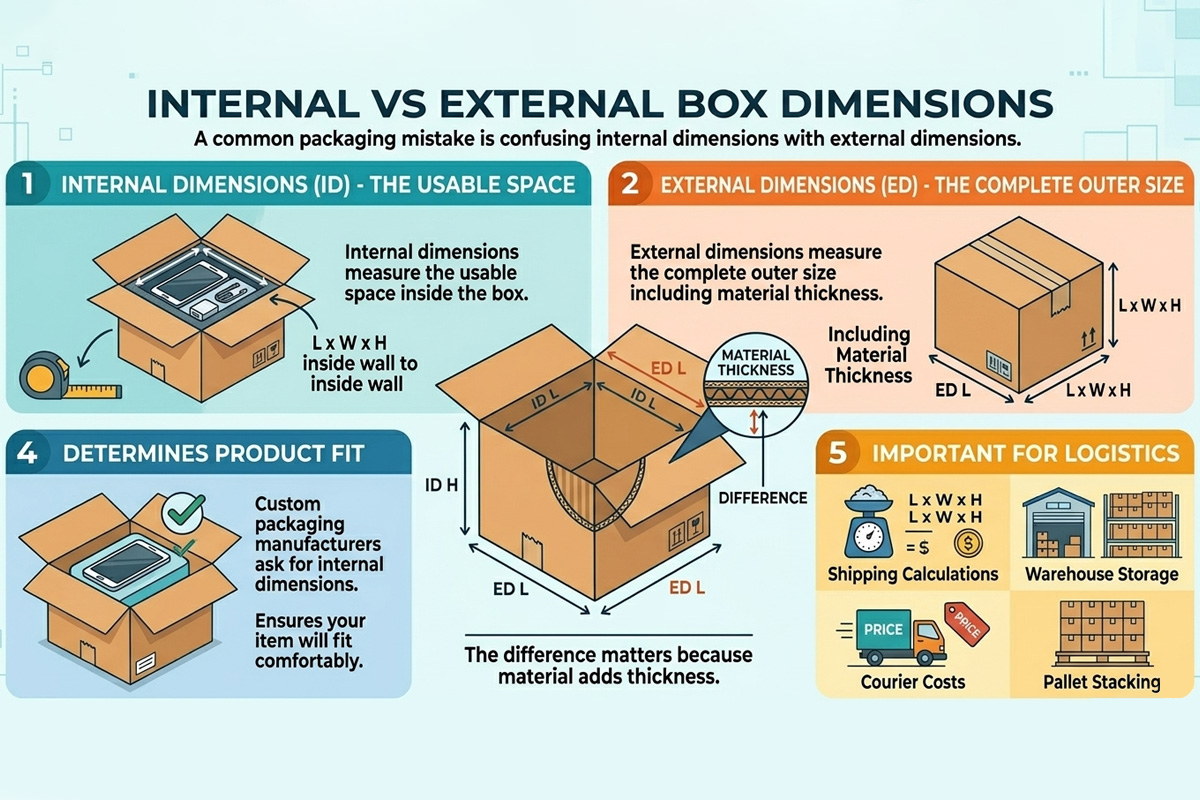
The common packaging mistake is confusing internal dimensions with external dimensions.
Internal dimensions measure the usable space inside the box. These measurements determine whether the item will fit comfortably inside the packaging. Custom packaging manufacturers ask for internal dimensions.
External dimensions measure the complete outer size of the box including material thickness.
These dimensions are important for:
The difference between external and internal dimension matters because corrugated boxes and rigid boxes packaging materials add thickness to the outer structure.
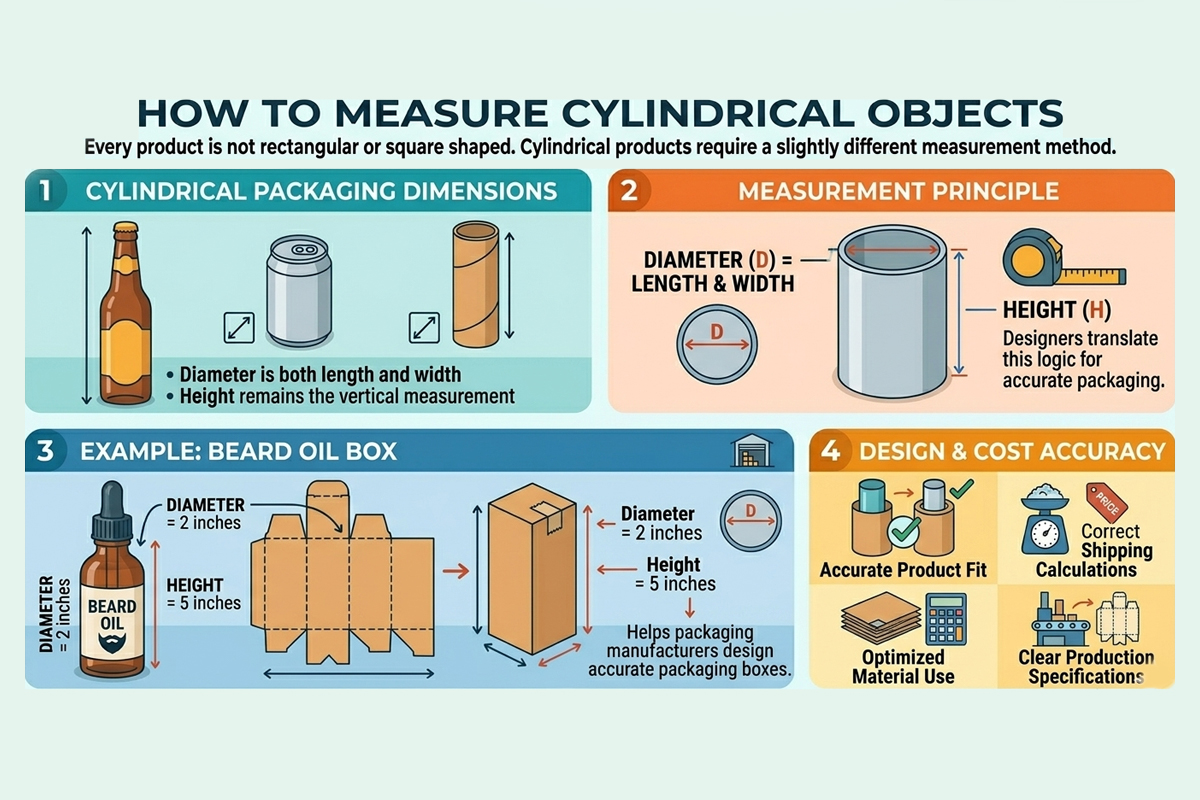
Every product is not rectangular or square shaped. Cylindrical products including bottles, tubes, and cans require a slight different measurement method.
For cylindrical packaging,
For example, A beard oil boxes will have
This helps packaging manufacturers design accurate cylindrical packaging boxes.
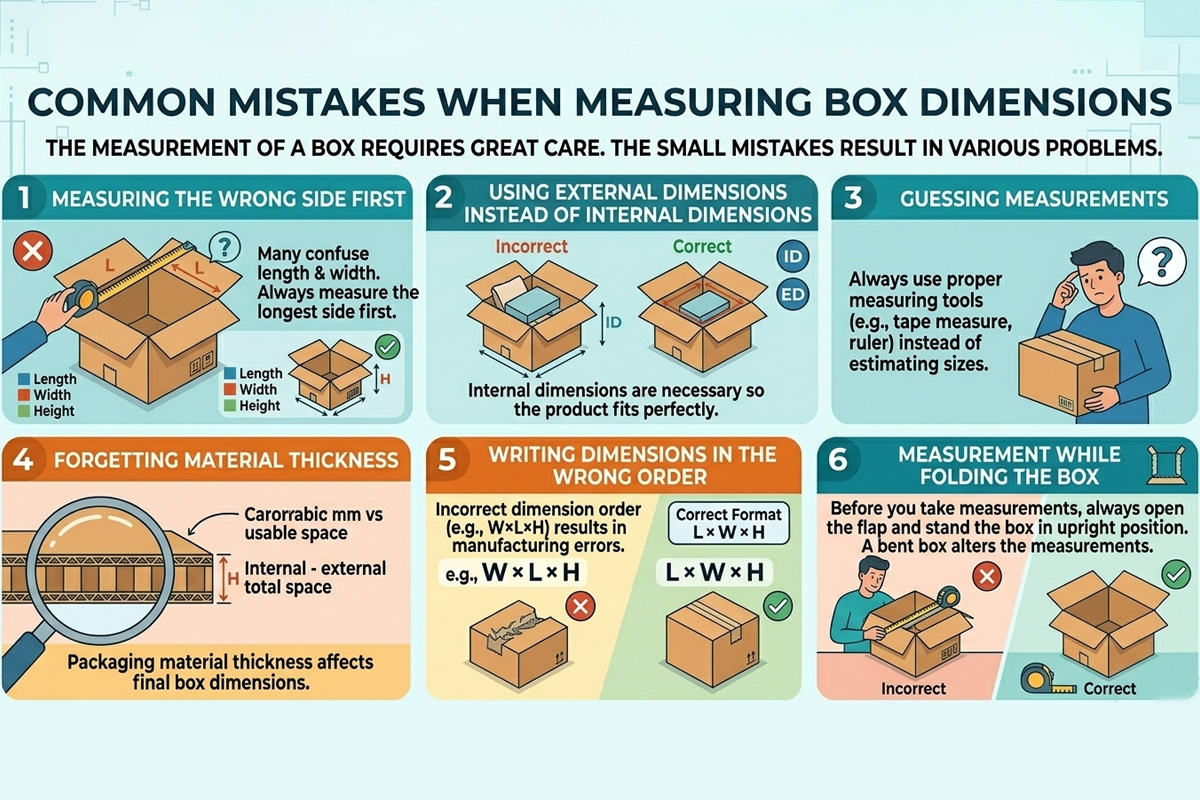
The measurement of a box requires great care. The small mistakes result in various problems. Try to avoid the following mistakes to make great packaging.
Many people confuse length and width. Always measure the longest side first.
Internal dimensions are more necessary so the product fits perfectly in the boxes.
Always use proper measuring tools instead of estimating sizes.
Packaging material thickness affects final box dimensions.
Incorrect dimension order results in manufacturing errors.
A bent box alters the measurements. Before you take measurements, always open the flap and stand the box in an upright position.
Every customer should have knowledge of steps to measure box dimensions. It is essential to create accurate, cost effective and protective packaging solutions. Proper Length × Width × Height measurements improve product safety and reduce shipping costs. It also enhances the customer unboxing experience. Businesses that avoid above mentioned packaging mistakes for their products are most successful.
Do you want to place an order or need answers to any packaging related questions. Contact us at +1-341-221-5299 or send your queries to sales@thepackagingtree.com and our dedicated customer care representatives will assist you 24/7. Do not miss the opportunity to get premium custom packaging solutions according to your requirements. Reach out today and let us create the perfect packaging for your products.
A measuring tape or a ruler is enough for standard checks. But for high precision when you require small boxes or internal dimensions always go for digital calipers or laser measuring devices.
The following are the 7 units of lengths that are used all over the globe in measurement systems:
They are in order from smallest to largest but millimeters, centimeters and inches are most used in the packaging industry.
The simple multiply of length, width and height gives the volume of an object in cubic units like cubic inches or cubic meters.
The correct order is Length*Width*Height. This is used to describe the dimensions of a rectangle shaped object.
Length is measured first because it is the longest side of the base. After that measure the shortest side that is width and at the end measure the height.
Length, width and height in the packaging industry are measured from the inside of a box. This is done to find the usable space for products and ensure a snug fit. External measurements are taken for shipping volume.
Irregular shape products are measured by using templating (cardboard, string, contour gauges) for shapes. We divide these complex objects into simple geometries. Some physical methods including water displacement for volume and advanced options including 3D scanning or image processing are also used when need of high accuracy.







Visa, mastercard, paypal etc
6-8 business days

2D & 3D mock ups

Premium custom boxes
We are offering premium quality services for your personalized Custom Box Packaging. Besides, we provide Offset and Digital Printing.

The Packaging Tree is a one stop solution for the short-run Custom Packaging, Custom Printed Boxes, Wholesale Custom Boxes needs and supplies. At affordable prices. Request a free quote.


© 2026 Packaging Tree. All Rights Reserved


.webp "{$post->name}}")
.webp "{$post->name}}")
.webp "{$post->name}}")