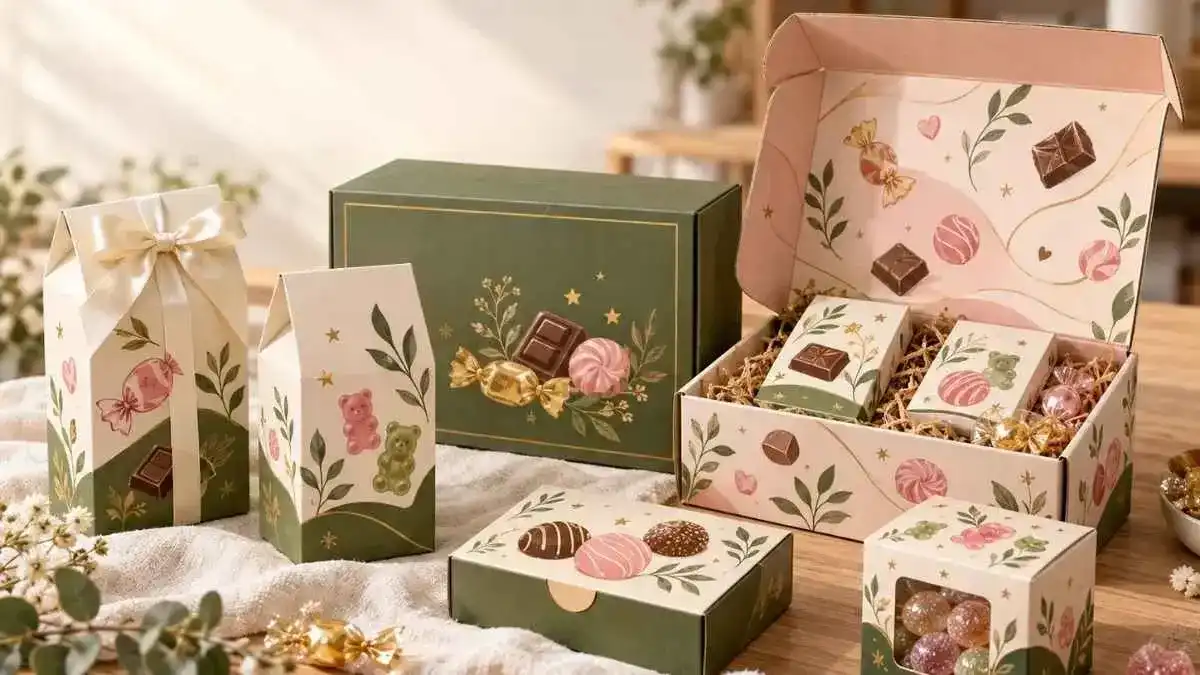
Candy Display Boxes for Seasonal Programs
Even packaging can't completely address the risk of chocolate softening and losing shape when exposed to temperatures that many retail stores experience in summer months or near heating appliances. Candy Display Boxes with chocolate or other heat sensitive candy do better when they have some ventilation within the display structure than a completely closed display, as the heat trapped inside a closed display can cause softening to happen more quickly, even at temperatures that a shopper may consider comfortable for the store.
Wholesale Custom Candy Display Boxes Often Run on Seasonal Quick-Turn Digital Printing
Holiday and seasonal candy programs are usually run on a shorter schedule than a brand's year round product line program. Usually, a short production window is required by the programs that are driven by the calendar, and digital printing eliminates the cost of setting up plates, making it more financially feasible than offset printing for seasonal candy display boxes, such as those for the Halloween, winter holidays, and Valentine's Day seasons.
Candy Packaging Boxes Frequently Include Divider Trays for Multi-Flavor Assortments
Assortment candy requires an internal structure to not only separate the different varieties from one another but also to present them in an organized fashion that will not blend together. When candy packaging boxes are created for assortment format, a die-cut divider tray will be included to suit the particular number and size of the candy flavors in the box. Once the actual product lineup is confirmed, then the sections can be determined with the spacing to ensure the sections are not too small for one flavor and too large for the other.
Custom-Printed Candy Display Boxes Often Share One Structural Die Across an Entire Seasonal Calendar
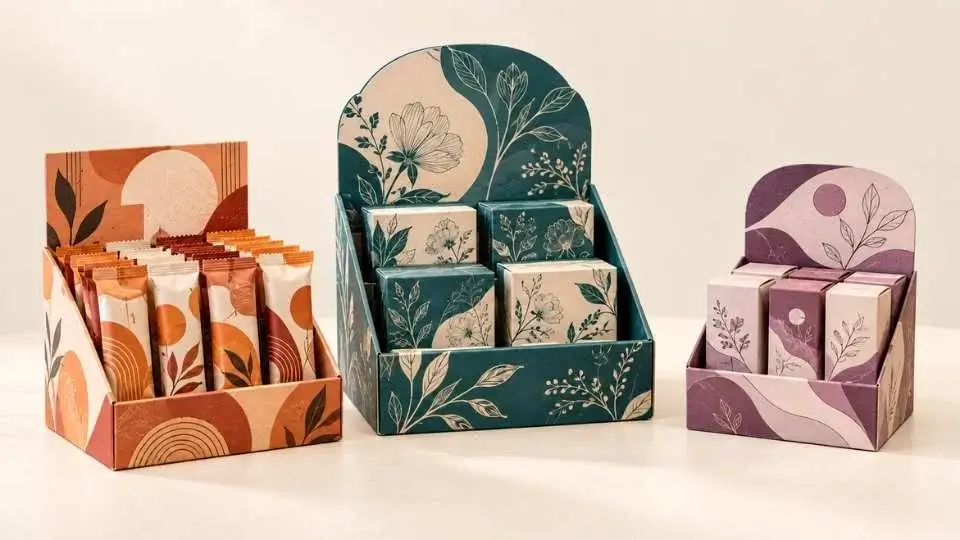
If the dieline from season to season is the same, there is no need to have four separate structures to provide the display. The physical structure and dimensions, along with the assembly method, of one of these Custom-Printed Candy Display Boxes is retained for the spring, summer, fall and winter releases, and only the printed graphics are changed each time. This way tooling is sunk once and used for four seasons instead of resetting it four times a year, and still has its unique look each season.
Candy Display Boxes Wholesale Orders for Chain Retailers Often Must Meet Specific Dimension Compliance
Many large retail store chains will have their own in-house packaging standards that must be adhered to by any supplier of products to the store before they will be accepted onto the shelves. Candy Display Boxes Wholesale orders to any particular national or regional chain should include the chain's dimension and weight compliance requirements before a design is finalized because a box that meets all other design requirements may be rejected simply because it does not meet weight and dimension requirements.
Candy Display Box Packaging for Chocolate Benefits From Some Airflow Rather Than a Sealed Structure
A closed display will keep heat and humidity away from chocolate products more successfully than a display with some ventilation. For chocolate candy, small gaps or a semi-opened display box is a great option for candy packaging as it allows for air to circulate around a candy while still providing enough protection to keep the candy from being exposed to dust. It is a more limited concern than the packaging of any kind of candy, as dry, hard candy or gummies do not require the same heat sensitivity as chocolate candy would.
Candy Display Boxes With Tear-Back Lids Use a Perforated Strip for Controlled Restocking Access
A tear-back lid is a specific mechanism, not just a general opening feature, designed to give staff repeated restocking access without damaging the display's overall structure. Candy Display Boxes with Tear-Back Lids typically work through a defined sequence:
- A perforated strip runs along one edge of the top panel, scored during die-cutting to tear cleanly
- Staff pull the strip to open a restocking flap, leaving the rest of the lid structure intact
- The flap can be closed loosely between restocking visits, offering some dust protection without a full reseal
- Repeated opening and closing is possible without the tear-away damage a single-use perforation would cause
Candy Display Packaging Generally Follows First-In-First-Out Rotation Principles in Its Design
Candy has a shelf life and when the display makes it difficult to remove old stock, staff are likely to just pile more on top instead of rotating. Candy display packaging for rotation usually makes it easy for staff to reach older stock first, as opposed to a single-loading, single-access type of packaging. It is of greater importance for candy that has a short shelf life (fresh-baked or perishable candy) than for shelf-stable hard candy.
Custom-Made Candy Display Boxes Can Mean Structural Customization, Print Customization, or Both
Custom-made gets used loosely enough in this category that clarifying its actual scope avoids a mismatched quote. custom-made candy display boxes requests generally fall into a few categories:
- Fully custom structure and print, a new dieline and fully bespoke graphics, the highest cost and longest lead time
- Stock structure with custom print, an existing display shape with new branding applied, faster and less expensive
- Custom structure with stock or simplified print, less common, typically for brands prioritizing an unusual shape over graphic complexity
- Minor customization of an existing custom design, such as a size or color adjustment to a previous order
Custom Candy Display Packaging Orders for Seasonal Runs Typically Carry Lower Minimum Quantities
Candy displays that are seasonal or promotional do not require the same level of production like core lines do; the minimum order values are often indicative of the shorter shelf life. Standard print minimums for custom candy display packaging typically are lower than those minimums which would be required for an evergreen display print program, as there is not the set-up cost pressure to offset printing that is associated with print volumes during a specific seasonal campaign.
Why Confectionery Brands Choose the Packaging Tree for Seasonal Display Programs
Seasonal candy programs are typically produced on a shorter cycle, with significantly less volume, and by using the same production strategy, often results in significant cost or opportunity loss. The Packaging Tree offers seasonal candy displays throughout the year on a single reusable structural die that changes print artwork each season, with a focus on digital printing to maintain realistic seasonal minimums, and verifies chain dimension compatibility prior to a final design for national retail placement. Ventilation is incorporated into the display structure rather than a completely enclosed case for chocolate and heat-sensitive candies and tear-back lid mechanisms are engineered for repeated restocking access on high-turnover programs.